THE LOCAL SCALE REPORT
Practical intelligence for local service businesses.
The Local Scale Report™ explores the systems, technology, marketing, customer experience, and operating principles helping good businesses become stronger.
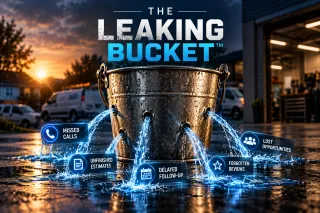
The Leaking Bucket™ Where Your Revenue Quietly Disappears Before You Ever Notice It
In today’s competitive landscape, having a well-defined digital marketing strategy is essential for success. A strategic approach ensures that your efforts are focused, measurable, and aligned with yo... ...more
Revenue Capture & Retention
October 03, 2026•4 min read
EXCLUSIVE INDUSTRY SPOTLIGHT: PUBLISHED BY THE LOCAL SCALE REPORT...
Inside ScaleFlow™
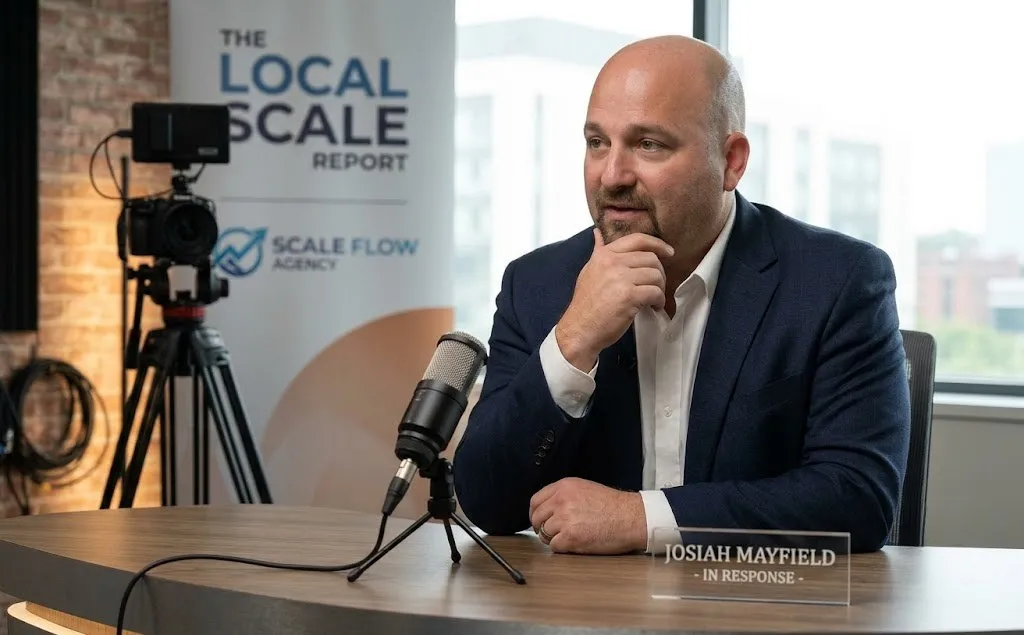
"Why growing businesses eventually reach a point where effort alone isn't enough—and the questions that reveal what needs to change next. The Following is the full interview of The Local Scale Report's feature interview with Josiah Mayfield, Lead Strategic Architect at ScaleFlow Agency."
DEMAND BETTER
A Note From the Editor
If you're like most local service business owners, you're probably not looking for another piece of software.
You're looking for more qualified leads.
Better Google visibility.
More five-star reviews.
Fewer missed opportunities.
More repeat business.
Less time spent chasing paperwork.
And maybe—if you're being completely honest—a little less weight on your shoulders at the end of each day.
Those are real goals.
And if you've already built a healthy business, getting this far probably required a tremendous amount of grit, adaptability, and personal effort. The systems and habits that helped you get started may have served you remarkably well—but success creates more to carry, and eventually the business begins asking for more than one person can reasonably hold together alone.
That's where the challenge changes. Many of the solutions available today address only one piece of a much larger picture.
More advertising doesn't help if opportunities fall through the cracks.
More leads don't solve inconsistent follow-up.
A new website won't improve a disconnected customer experience.
A CRM alone won't create an operating system.
Technology creates its greatest value when the pieces work together.
That's why this interview exists.
The Local Scale Report™ was created to help local service business owners better understand the operational challenges that quietly limit growth—and to explore practical ideas for building stronger businesses.
Some of those ideas are simple.
Some require a shift in perspective.
All of them are grounded in one belief:
Strong businesses aren't built by working harder forever. They're built by continually improving the systems that support the people doing the work.
The business landscape continues to evolve.
Customers search differently than they did ten years ago.
They communicate differently.
They compare businesses differently.
The principles of great service haven't changed—but the systems that support great service must continue evolving with the marketplace.
That's why this conversation isn't about chasing the latest trend.
It’s about understanding which principles endure, which tactics and technologies evolve, and how thoughtful systems help a good business keep adapting without losing what made it good in the first place.
In the conversation that follows, we'll explore questions like:
Why do so many successful business owners eventually feel like they're carrying everything themselves?
Why doesn't "more leads" always produce more growth?
Where does opportunity quietly disappear inside otherwise healthy businesses?
What makes one local business easier to find, trust, and choose than another?
How can automation support people instead of replacing them?
What's the difference between buying capable technology and building a system that actually works?
What should business owners understand about the infrastructure their company increasingly depends on?
Most importantly, we'll leave you with practical ideas you can begin applying inside your own business immediately.
Whether you eventually choose to work with ScaleFlow or not, our commitment is simple:
If you invest your time in this conversation, we'll do everything we can to ensure you leave with ideas that return far more value than the time you invested.
Because good education shouldn't simply explain problems.
It should help people solve them.
That's where our conversation begins.
THE INTERVIEW
ON THE RECORD
CORE CROSSROADS™
“The hardest part about owning a business usually isn't the work itself. It's trying to carry everything that comes with it.”
— Josiah Mayfield, Founder of ScaleFlow™
The Interviewer: Let's start with the obvious question. What exactly is ScaleFlow?
Josiah: That's the right place to begin because, at first glance, people often assume we're another software company, another marketing agency, or simply another AI platform.
We're not.
ScaleFlow professionally installs and supports Business Operating Systems™ for established local service businesses.
But the reason we do that begins with a much simpler question:
How do you help good business owners keep building great businesses without having to carry every responsibility themselves?
Over the years, I've met countless owners who weren't struggling because they lacked skill, determination, or work ethic. In many cases, those qualities are exactly what helped them build the business in the first place.
But success creates more to carry.
More customers. More phone calls. More estimates. More follow-up. More scheduling. More paperwork. More moving parts.
For a while, hard work and personal involvement can carry an incredible amount of that load.
Eventually, though, the question changes.
It stops being:
"How can I personally keep up with everything?"
and becomes:
"How can I build a business that's capable of carrying more?"
That's where ScaleFlow comes in.
We help put the tools and connected systems behind the business so important responsibilities don't have to keep depending entirely on the owner's memory, manual effort, and constant intervention.
And there's an important distinction there.
We don't just provide software.
We provide the right tools, connect them into working business systems, professionally establish the operating environment around the business, and continue supporting that environment through the appropriate relationship.
The tools matter.
The systems make them work together.
The partnership helps them keep working as the business evolves.
Technology is certainly part of that.
But technology isn't the destination.
Operational capability is.
That operating environment can help protect revenue, improve customer experience, strengthen local visibility, automate repetitive work, and create greater capacity as the business grows.
It may include customer management, communication, scheduling, follow-up, automation, reputation, local visibility, payments, AI-assisted capabilities, and other tools the business depends on.
But the real value isn't found in any one feature.
It's in how those tools and systems work together around the way the business actually operates.
Because a CRM alone isn't an operating system.
A website alone isn't an operating system.
AI alone isn't an operating system.
They're tools.
And good tools become much more valuable when they're connected into systems that support the business as a whole.
Our philosophy is simple:
Technology should support people.
Systems should support businesses.
Partnership should support growth.
We aren't interested in giving owners another login they'll have to figure out on their own.
And we're not trying to take over their business.
Their business remains theirs.
Our role is to help professionally establish and support the operating system behind it so they don't have to build and maintain every piece alone.
Because the goal isn't more technology.
It's a better-running business.
The Interviewer: Most owners don't wake up thinking they need a business operating system. They usually think they need more leads, better marketing, or another employee. Why do you believe the real problem is often something deeper?
Josiah: Because those are often the places where the pressure becomes visible—not necessarily where the underlying problem begins.
And that's completely understandable.
If business slows down, the natural reaction is:
"I need more customers."
If the phone won't stop ringing:
"I need to hire somebody."
If things feel disorganized:
"Maybe I need a better CRM."
Those aren't unreasonable conclusions.
They're simply responses to the part of the business where the pain is showing up.
The deeper question is whether the business is fully capturing the opportunity it already creates.
A missed phone call.
A web form that doesn't receive a timely response.
An estimate that never gets followed up on.
A happy customer who never leaves a review.
A past customer who would've gladly hired you again if someone had simply stayed in touch.
None of those moments looks catastrophic by itself.
But small operational gaps compound.
And over time, a surprising amount of opportunity can disappear between the moment a customer becomes interested and the moment that opportunity turns into revenue, a repeat relationship, a review, or a referral.
That's why I often compare it to a leaking bucket.
Most people instinctively reach for a bigger hose.
More advertising.
More leads.
More effort.
More software.
But if the bucket has holes in it, pouring more water into it doesn't solve the underlying problem.
It just gives more opportunity a chance to leak out.
Before you spend more money creating new opportunities, it makes sense to strengthen your ability to capture and protect the opportunities you're already earning.
That's the thinking behind Found Money First™.
Before you amplify the business, strengthen what happens to the opportunity already flowing through it.
Recover what you're already missing.
Protect the relationships you've already earned.
Improve the systems supporting the customer experience.
Then, when you do invest in additional marketing or advertising, you're amplifying a stronger business.
That's also why we don't think of individual tools as the answer by themselves.
A CRM can be incredibly useful.
A website can be incredibly useful.
Automation can be incredibly useful.
But the larger opportunity comes from making those tools work together around the way customers actually move through the business.
Because the goal isn't simply to generate more activity.
The goal is to help more of the activity you're already generating become revenue, stronger customer relationships, and sustainable growth.
That philosophy became one of the first operating principles we built ScaleFlow around.
We call it Found Money First™ because sometimes the next growth opportunity isn't something you need to buy.
It's something you've already earned and haven't fully captured yet.
Editor’s Note: If that idea resonates with you, two companion articles explore it in greater depth.
The Leaking Bucket™ examines the small operational gaps that allow otherwise valuable opportunities to quietly disappear.
The Database Goldmine™ explores why past customers, unfinished conversations, estimates, and existing relationships can become some of the most overlooked sources of future opportunity inside a business.
Strengthen what you've already earned. Then amplify it.
The Interviewer: One thing that becomes obvious pretty quickly is how much time ScaleFlow spends educating business owners before asking them to make a decision. You could simply explain the software, the features, and the price. Why did you choose a more educational approach?
Josiah: Because I've experienced the other side of that equation myself.
I've spent more than twenty-five years in sales, business development, and operations, and one lesson I've learned over and over is that giving somebody access to a capable product is not the same thing as helping them receive the full value of it.
I saw that long before ScaleFlow ever existed.
Years ago, when I sold Kirby systems, I would meet people who had owned one for ten or fifteen years. They had this incredibly capable system sitting in their home, but half the attachments were still sitting untouched in a closet.
The product wasn't the problem.
Nobody had ever really taught them how to use everything they had purchased.
That always bothered me.
Because to me, part of the responsibility of selling something is making sure the customer understands how to receive the benefit you promised them.
You don't just show them what's possible, collect the money, hand them the equipment, and leave.
You help them understand it.
You show them how to use it.
You make sure they can actually put it to work.
Years later, when I began working with modern business software, I ran into a very similar problem from the other direction.
The technology was incredibly capable.
CRMs.
Automation.
Workflows.
Communication systems.
Websites.
Scheduling.
Reputation tools.
AI.
All of these things could potentially make a business dramatically easier to operate.
But capability and usability are two very different things.
I learned firsthand how difficult it can be to take a collection of powerful tools, understand what each one actually does, configure them correctly, connect them, and turn them into something that works coherently inside a real business.
And I had decades of business and sales experience behind me.
That made me think:
"If this takes this much effort for me to understand and put together, what happens when we hand it to a local service business owner who's already working fifty or sixty hours a week running the company?"
That question changed the direction of ScaleFlow.
I didn't want to build a business around handing someone a login and saying:
"Here are all the features. Good luck."
And I didn't want to simply install a generic template and assume the customer would somehow figure out the rest.
I wanted to build the education, implementation, adoption, and support around the technology so the customer could actually use what they were paying for.
That's why education became such an important part of ScaleFlow.
It's why we created the Local Scale Report™.
It's why we built the Digital Showroom™.
It's why we developed the Performance Review™.
It's why we think carefully about progressive adoption.
And it's why the Operator Continuity Engine™ exists after installation—to help preserve the relationship between the business, the people operating it, and the systems we've helped put in place.
Because owning better tools doesn't automatically build a better business.
The tools have to be understood.
They have to be configured.
They have to fit the way the business actually operates.
People have to become comfortable using them.
And those systems have to continue evolving as the business and marketplace change.
That's why I don't think education is simply something we do before the product.
Education is part of what we provide.
If we're going to ask business owners to change the way they operate, then we have a responsibility to explain what we're changing, why we're changing it, and how it's supposed to make their business stronger.
Whether someone eventually becomes a ScaleFlow client or not, I want them to leave understanding their business better than when they arrived.
And if they decide we're the right partner after that, the relationship begins with understanding instead of persuasion.
The Interviewer: A lot of businesses immediately think they need more advertising or more leads. Yet you've said many times that ScaleFlow focuses on local visibility before paid advertising. Why?
Josiah: Because I think there's an important difference between creating additional attention and being prepared to benefit from the attention your business receives.
Every day, people in your community are already looking for help.
Some of that attention comes organically.
People search Google.
They open Maps.
They read reviews.
They visit websites.
They ask AI for recommendations.
They hear about you from someone they trust.
And some of that attention can absolutely come from paid advertising.
There's nothing wrong with that.
Advertising can be a very useful way to create additional attention.
The real question is:
What happens when that attention reaches your business?
Can people find you easily?
Do they feel confident when they do?
Is your information accurate?
Are your reviews strong?
Does your website help them trust what they're seeing?
Can they contact you easily?
Do you respond quickly?
Does the business actually capture the opportunity—or does some of it quietly slip away?
That's why I don't think this is an either-or conversation between local authority and advertising.
It's really a conversation about foundation first, amplification second.
Because both organic traffic and paid traffic have value.
But both become more valuable when the business is prepared to handle them well.
One of the biggest misconceptions in business is believing that if something worked five or ten years ago, it will keep working the same way forever.
The craftsmanship that built your reputation doesn't become outdated.
Integrity doesn't become outdated.
Great customer service doesn't become outdated.
Those are enduring principles.
What changes are the ways customers discover businesses, evaluate businesses, and decide who to contact.
Years ago they reached for the Yellow Pages.
Today they open Google Maps, compare reviews, visit websites, and increasingly ask AI for recommendations.
Tomorrow, those tools will continue evolving.
Healthy businesses don't need to abandon what made them successful.
They need to keep adapting the systems that help customers find them, trust them, and choose them in the marketplace that exists now.
That's why Local Authority First™ isn't about rejecting advertising.
It's about strengthening the places customers are already searching and deciding before pouring even more opportunity into the business.
Because visibility alone isn't enough.
Traffic alone isn't enough.
Attention alone isn't enough.
The business has to be ready to convert that attention into trust, conversation, and customers.
That's where the real leverage is.
If a business has incomplete information, weak reviews, an outdated website, slow follow-up, missed calls, or disconnected systems, then some of the value of both organic traffic and paid traffic gets lost.
Advertising may still create attention.
But weak systems reduce how much of that attention becomes real opportunity.
That's why we focus on the foundation first.
Strengthen your Google Business Profile.
Build review consistency.
Make sure your business information is accurate everywhere customers search.
Make your website useful.
Improve responsiveness.
Create a better customer experience from the first interaction forward.
None of that means you should never advertise.
It means that when you do advertise, you're pouring attention into a stronger system.
And that's a big difference.
Advertising is an amplifier.
It can create more traffic.
But whether that traffic becomes more business depends on the strength of the foundation underneath it.
So our sequence is intentional:
Strengthen the places customers already find you.
Improve the systems that capture and convert opportunity.
Then amplify with additional attention when it makes sense.
That's not anti-advertising.
It's simply a healthier and more sustainable way to make advertising work better.
Because the goal isn't just more traffic.
The goal is more of the right traffic turning into real business.
And that happens when the business becomes easier to find, easier to trust, easier to contact, and easier to choose.
Editor’s Note: If you'd like to explore that idea further, The Local Authority Grid™ goes deeper into how local visibility, reputation, customer confidence, and modern search behavior work together—and why stronger local authority helps both organic traffic and paid traffic perform better.
The Interviewer: You keep coming back to the phrase "wearing too many hats." Why do you think so many business owners eventually end up in that position?
Josiah: Because that's how most successful businesses begin.
When you're starting out, you don't have departments.
You don't have office staff.
You don't have specialists.
You don't have a management team.
You are the salesperson.
The estimator.
The technician.
The scheduler.
The marketer.
The bookkeeper.
The owner.
There's nothing wrong with that.
In fact, it's how many great businesses get their start.
What I've learned, though, is that every stage of business brings a different set of challenges.
Your first customer teaches you how to serve.
Your tenth customer teaches you how to organize.
Hiring your first employee teaches you how to delegate.
Growing your reputation teaches you how important consistency really is.
As the business grows, success creates new responsibilities.
More customers.
More communication.
More scheduling.
More follow-up.
More coordination.
More opportunities.
None of those are signs something is wrong.
They're usually signs that the business is doing exactly what you hoped it would do.
The challenge is that every new stage of growth asks something new of the owner.
At first, working harder solves a lot of problems.
Eventually, the question changes.
It stops being:
"How can I keep doing more?"
and becomes:
"How can I build a business that's capable of doing more?"
That's the point where the real issue becomes capacity.
Not because the owner has failed.
Not because they aren't working hard enough.
But because success has created more moving parts than one person can reasonably manage through memory, longer hours, and determination alone.
And that's when a different question becomes important:
Which responsibilities truly require the owner's judgment, experience, leadership, or relationships—and which simply require consistency?
Because those are not the same thing.
Technology can help.
People can help.
Better processes can help.
But the objective shouldn't be to give the owner another responsibility to manage.
It should be to move repeatable responsibility out of the owner's head and into dependable systems wherever that makes sense.
Technology should create capacity for people—not erase the people who make the business valuable.
The owner still leads the company.
The team still serves the customer.
Craftsmanship still matters.
Judgment still matters.
Relationships still matter.
But the business shouldn't require one person to personally remember, initiate, coordinate, and rescue every repeatable responsibility.
Technology shouldn't create another job for the owner.
It should quietly support the business so the owner has more capacity to lead the company, serve customers, develop the team, and make the decisions that actually require them.
To me, that's what operational relief really means.
Not necessarily working less.
Building a business that's capable of carrying more of its own success without requiring one person to carry every responsibility alone.
The Interviewer: You describe ScaleFlow as building business infrastructure instead of simply providing software. What's the difference?
Josiah: The easiest way to explain it is with an analogy.
Imagine someone backs a truck into your driveway and unloads everything needed to build a house.
Lumber.
Concrete.
Windows.
Electrical supplies.
Roofing materials.
Plumbing.
Insulation.
It's all there.
Then they shake your hand and say:
"Good luck."
Have they built you a house?
Of course not.
They've given you the materials.
The materials may be excellent.
You may have everything required to build an incredible house.
But somebody still has to understand how the pieces fit together.
They have to determine what gets built first.
They have to configure it correctly.
Connect it correctly.
Test it.
Solve problems.
And turn all of those individual materials into something people can actually live in.
Business technology is very similar.
Today's platforms can be incredibly capable.
They can manage customers.
Schedule appointments.
Automate follow-up.
Handle communication.
Collect payments.
Manage reviews.
Support marketing.
Generate reports.
Even add AI-assisted capability.
The technology isn't necessarily the problem.
And the tools aren't unimportant.
The tools matter.
But having the tools and having a working operating system are two different things.
Somebody still has to take those capabilities and configure them around the business.
The workflows have to make sense.
The information has to go where it belongs.
The communication has to connect to the customer journey.
The automations have to fire correctly.
The team has to understand what they're using.
And the system has to fit the way the business actually operates.
That's the difference between software access and a working operating environment.
And that's where a lot of owners can fall into what we call The 2:00 AM Failure Trap™.
They buy technology because it's supposed to create capacity.
The demo looks great.
The feature list looks great.
The possibilities are exciting.
Then somebody still has to make it all work inside the business.
Another tutorial.
Another workflow.
Another setting.
Another automation that didn't fire.
Another night trying to figure out the system instead of running the business.
Eventually, the tool that was supposed to create capacity becomes another project competing for the owner's capacity.
The problem isn't necessarily the software.
The problem is expecting software access by itself to create an operating system.
That's one of the biggest lessons behind ScaleFlow.
We don't believe an owner should have to become a systems integrator just to receive the benefits of better systems.
That's where professional installation matters.
We help determine what should stay.
What should connect.
What needs to be configured.
What responsibilities the system should carry.
And how those pieces should work together around the actual business.
That's what I mean when I talk about business infrastructure.
It's not one feature.
It isn't one website.
It isn't one CRM.
It isn't one automation.
It's the operating environment those pieces create when they're thoughtfully connected around the responsibilities of the business.
Your website can prepare the customer before the conversation begins.
Your communication can support scheduling.
Your scheduling can support follow-up.
Your follow-up can support reviews.
Your reviews can strengthen local visibility.
Your visibility can create future opportunity.
Information can move instead of being recreated.
Responsibilities can happen consistently instead of depending entirely on somebody remembering them.
That's when technology starts becoming operational capability.
The business becomes easier to operate.
Customers can receive a more consistent experience.
The team spends less time fighting disconnected processes.
And the owner doesn't have to personally carry every repeatable responsibility.
So when I say ScaleFlow builds business infrastructure, I'm not saying the software doesn't matter.
It absolutely does.
I'm saying software provides capability.
Professional installation helps turn that capability into a working operating environment.
Education helps people understand it.
Progressive adoption helps the business actually begin using it.
And continuing support helps that environment remain useful as the business evolves.
That's the difference.
We don't want to unload the materials in the driveway.
We want to help build the house.
Editor’s Note: Two companion articles explore different sides of this idea.
The Broken Promises Briefing™ examines why capable business technology can still disappoint when access to the platform is mistaken for implementation—and why configuration, education, adoption, and continuing support matter.
Who Holds Your Keys?™ explores a related but different question: ownership, access, control, portability, and what a business should understand about the infrastructure it increasingly depends on. Pasted markdown
The Interviewer: You've said a few times that automation should support people, not replace them. That's a very different message from what people usually hear about AI. Why is that distinction so important?
Josiah: Because I think we've started asking the wrong question.
Instead of asking:
"How do we replace people?"
we should be asking:
"How do we help people do their best work?"
For most local service businesses, the real value isn't created by software.
It's created by skilled people.
A roofer still has to install the roof.
An HVAC technician still has to diagnose the system.
An electrician still has to solve the problem.
A plumber still has to make the repair.
Technology doesn't replace craftsmanship.
It can support everything around it.
Where automation and AI can become especially valuable is in the repetitive operating work that quietly consumes so much capacity.
Answering routine questions.
Sending appointment reminders.
Following up on estimates.
Responding when a phone call is missed.
Requesting reviews after a completed job.
Routing inquiries to the right person.
Keeping customer information organized.
Those responsibilities matter.
But they don't always require a skilled person's judgment or personal attention every single time.
When dependable systems carry repetitive work consistently, people have more capacity for the work that actually requires them.
That's why I sometimes describe automation as digital labor.
Not because software is replacing the people who make the business valuable.
But because technology can carry certain repeatable responsibilities that would otherwise consume human time and attention.
It's similar to why a business might hire an administrative assistant, a dispatcher, or an office manager.
You aren't replacing the technician.
You're creating capacity around the technician so that skilled person can spend more time doing the work only they can do.
The same principle applies to the owner.
If technology can reliably handle a reminder, route an inquiry, send a follow-up, organize information, or complete another approved repetitive task, the owner doesn't need to personally carry that responsibility every time.
That creates room for judgment.
Leadership.
Relationships.
Craftsmanship.
Problem-solving.
The parts of the business where human experience matters most.
That's why one of our operating principles is:
Use technology to create capacity for people—not to erase the people who make the business valuable.
And I think that's especially important as AI becomes more capable.
The question shouldn't simply be:
"What can AI do instead of a person?"
A better question is:
"Which responsibilities can technology carry reliably so people have more capacity for the responsibilities that actually require people?"
That's a very different way to think about it.
The goal isn't fewer people.
The goal is better-supported people.
People who aren't spending as much time on repetitive work that a dependable system can handle.
People who have more capacity for customers, leadership, judgment, creativity, craftsmanship, and relationships.
Technology shouldn't reduce humanity.
It should create more room for it.
Editor’s Note: Replacing Leather With Digital Labor™ explores this idea in greater depth—the shift from traditional “shoe leather” and repetitive human legwork toward systems that can carry consistent digital work while leaving judgment, relationships, craftsmanship, and leadership with people. Pasted markdown
The Interviewer: One of the first ideas people encounter when they explore ScaleFlow is "Found Money First™." Why has that become such a foundational principle?
Josiah: Because I think it's one of the biggest misconceptions in business.
When owners feel pressure, the first instinct is usually to spend money creating new opportunities.
Run more ads.
Buy more leads.
Launch another campaign.
There's certainly a time for those things. Advertising can be incredibly effective.
But before turning up the faucet, I think it makes sense to ask a simpler question:
"Are we already capturing the opportunities we have?"
Most businesses are sitting on value they don't even realize they have.
Past customers who were never contacted again.
Estimates that were never followed up.
Missed phone calls that never received a response.
Satisfied customers who were never asked for a review.
Referral opportunities that quietly disappeared.
Appointments that could have been reactivated.
Small operational gaps that slowly compound over time.
None of those opportunities require creating demand.
They require paying better attention to the demand that's already there.
That's why we call it Found Money First™.
It's not about finding hidden tricks.
It's about recovering value that's already been earned but never fully captured.
One of the things we've learned over the years is that growth isn't always about doing more.
Sometimes it's about allowing more of what you're already doing to produce the results it should have been producing all along.
That's a very different way of thinking about growth.
Instead of asking,
"What else do I need to buy?"
we start by asking,
"What value have I already created that I'm failing to protect?"
In many cases, reconnecting with existing relationships is faster, less expensive, and more profitable than trying to create entirely new ones.
Once those operational leaks are addressed, advertising becomes far more effective because you're pouring new opportunities into a stronger business.
That's why we often say:
Protect it. Strengthen it. Then amplify it.
Growth built on strong systems tends to be more predictable, more sustainable, and a lot less stressful than growth built on constant firefighting.
Found Money First™ isn't a marketing tactic.
It's an operating philosophy.
It reminds us that healthy businesses don't automatically become stronger by creating more activity.
They become stronger by increasing the return on the activity they're already generating.
We explore that philosophy from two different perspectives in the companion articles.
The Leaking Bucket™ examines the small operational failures that quietly reduce growth long before most owners notice them.
The Database Gold Mine™ explores one of the most overlooked assets in nearly every business—the customers, conversations, and relationships you've already earned but haven't fully developed.
Together they explain why we believe growth should begin with stewardship before expansion.
Because the opportunity you're looking for tomorrow may already exist inside the business you've built today.
The Interviewer: Technology has never been more capable than it is today. Yet many business owners still end up frustrated after investing in new software or business systems. Why do you think that happens?
Josiah: Because capability by itself doesn't guarantee a good outcome.
Modern business technology is remarkably powerful.
The tools can do things that would've required entire teams not that many years ago.
But buying capable technology and successfully operating a business through it are two different things.
We talked earlier about the implementation side of that.
But there's another piece that matters just as much:
What happens after the system is installed?
A business isn't static.
People change.
Processes change.
Customer expectations change.
Technology changes.
The marketplace changes.
The business grows.
So I don't think implementation should be treated as one moment where somebody configures the software, hands over the keys, and disappears.
Installation establishes the environment.
Then the business has to learn it.
Use it.
Build confidence in it.
Understand which responsibilities the system is carrying.
Recognize where something needs to change.
And continue adapting the environment as the business evolves.
That's where I think a healthy partnership becomes important.
Not because the owner should become dependent on the provider.
And not because somebody outside the business should take control of the company.
Quite the opposite.
The business should remain theirs.
They should understand what they have.
They should become more confident operating it.
They should maintain appropriate access and control.
And the relationship should continue because it creates value—not because leaving would mean losing the business infrastructure they depend on.
That's an important distinction for us.
A good implementation partner should increase the client's capability, not manufacture dependency.
That's why ScaleFlow is designed around more than installation.
There's education.
Progressive adoption.
Client Support™.
The Operator Continuity Engine™.
And, where appropriate, the continuing Performance Partnership™.
Those pieces exist because we don't believe the work is finished simply because the technology is technically functioning.
The deeper question is:
Is the operating environment continuing to serve the business well?
Does the team understand it?
Is the owner becoming more confident?
Are changing needs being recognized?
Are useful capabilities actually being adopted?
Are adjustments happening because the business needs them—not simply because more features exist?
That's the kind of continuity we care about.
The goal isn't to make ScaleFlow indispensable.
The goal is to help the operating environment become increasingly useful, understandable, and dependable inside the business.
If we continue working together, I want that relationship to continue because the partnership keeps creating value.
Not because the client feels trapped.
That's what I think healthy implementation should lead to:
more capability, more confidence, more control, and a stronger business.
Editor’s Note: The Inside ScaleFlow™ Industry Spotlight that follows this interview explores how these ideas shaped the broader ScaleFlow model—from professional installation and progressive adoption to support, continuity, and the continuing Performance Partnership™. Pasted markdown
The Interviewer: If someone finishes this interview and remembers only one thing, what do you hope it is?
Josiah: That building a better business isn't about working harder forever.
It's about building a business that's capable of carrying more without asking you to carry all of it yourself.
I think that's one of the biggest challenges many business owners eventually face.
It's easy to start believing that feeling overwhelmed is simply the price of success.
That if you're exhausted...
constantly behind...
always reacting...
always putting out fires...
then maybe that's just what running a growing business is supposed to feel like.
I don't believe that has to be the goal.
Sometimes it's a sign that the business has simply grown beyond the systems that were originally built to support it.
The habits, effort, and determination that helped build the company may have worked extremely well.
But as responsibility increases, there can come a point where effort alone can't keep carrying everything the same way.
Not because the owner has become less capable.
Because one person's time, energy, memory, and attention will always have limits.
That's why ScaleFlow isn't simply about software.
And it isn't simply about automation.
Those are important tools.
What we're ultimately trying to create is operational capacity.
The ability for a business to serve more customers...
create a better customer experience...
protect more of the opportunities it earns...
strengthen its reputation...
adapt as technology evolves...
and continue growing without requiring the owner to personally hold every piece together.
Technology will continue to change.
The ways customers discover businesses will continue to change.
The tools available to business owners will continue to improve.
Those things have always changed, and they always will.
Principles endure. Tactics and technology evolve.
What shouldn't change are the principles that make great businesses worth building.
Serve people well.
Keep your promises.
Build trust.
Take care of your team.
Continue improving.
And build systems that support those principles instead of depending entirely on memory, hustle, or exhaustion.
That's the kind of business I hope more owners have the opportunity to build.
Because when the systems behind the business get stronger...
customers are better served.
the team has better support.
the owner has more capacity to lead.
and the business becomes more capable of carrying the success it's worked so hard to create.
And if ScaleFlow can play a part in helping make that happen, then we've accomplished exactly what it was created to do.
Business Operating Systems Built for Local Service Businesses.


Copyright © 2026 | ScaleFlow Agency™ | | | Terms & Conditions | Privacy Policy
Contact Us 903-505-6363 [email protected] Longview, TX
ScaleFlow Agency™ designs, installs, supports, and operates business systems for local service businesses through ScaleFlow Systems™. By submitting any form on this site, you agree to receive automated SMS and email communications. Message and data rates may apply. Reply STOP to opt-out at any time.